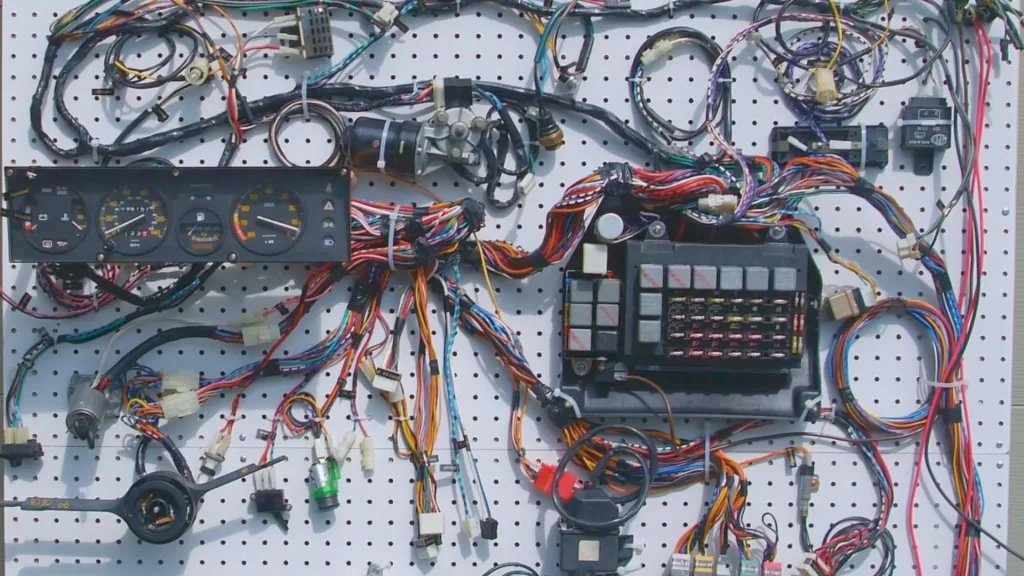
What is Wire Harness ?
Summary
What You Will Learn in This Article
A wire harness organizes multiple electrical wires, connectors, and terminals into a single structured assembly.
- It protects electrical wiring using insulation sleeves, tapes, conduits, and cable ties.
- Wire harnesses improve electrical safety, system reliability, installation efficiency, and maintenance access.
- Modern machines, vehicles, and industrial systems rely on harnesses to manage complex wiring networks.
- Basic electrical concepts such as voltage, current, resistance, and circuit structure are essential before learning harness design.
- Engineers must understand wire types, cable structures, connectors, and terminals to design reliable harness systems.

What is Wire Harness?
A wire harness is a structured system that organizes multiple electrical wires, cables, connectors, and terminals into a single assembly. Instead of having loose wires running everywhere, engineers bundle them together using protective materials such as:
- Insulation sleeves
- Cable ties
- Tapes
- Conduits
This organised wiring system improves:
✔ Safety
✔ Reliability
✔ Installation efficiency
✔ Maintenance
Example
In a modern car, a wire harness connects many systems such as:
- headlights
- engine sensors
- dashboard controls
- infotainment system
- battery system
Without a wire harness, the electrical system of a vehicle would become extremely complicated and unsafe.
Goals of Wire Harness Design (Industry Perspective)
In real engineering environments, wire harness design is not only about connecting wires. It focuses on achieving structured electrical performance and long-term system reliability.
Key goals include:
• Proper routing of wires to avoid heat, vibration, and mechanical damage
• Reducing electrical noise and interference in signal circuits
• Ensuring correct wire sizing for current carrying capacity
• Making installation faster during manufacturing
• Designing harness layouts that simplify maintenance and fault tracing
• Improving overall electrical safety of machines and vehicles
These goals are taught through practical exposure, design exercises, and real project simulations.
At institutes like MechEase, students are trained to understand not just theory but actual industry workflow in wire harness design. This includes component selection, connector mapping, harness routing logic, and basic design documentation used in automotive and industrial projects.
Basic Electrical Concepts Before Learning Wire Harness Design
Before learning advanced wire harness design, engineering students must first understand basic electrical concepts.
These fundamentals help engineers design safe and efficient wiring systems.
Electrical systems work by allowing electricity to flow through wires to power different devices and machines.
Three basic elements exist in almost every electrical system:
- Power source (Battery or Power Supply)
- Conductor (Wire)
- Load (Device like motor, light, sensor)
Understanding how electricity moves through a circuit is the first step in learning electrical design.

Types of Wires and Cables
Types of Wires and Cables
Different electrical systems require different types of wires depending on their use.
Some common types include:
- Single Core Wire : Used in simple electrical circuits.
- Multi-Core Cable : Contains multiple wires inside one cable.
- Shielded Cable : Used where protection from electrical interference is required.
- High Temperature Wire : Used in machines or automotive engines where heat is high.
Choosing the correct wire type is very important for safety and performance.

Voltage, Current, and Resistance
Voltage : Voltage is the electrical pressure that pushes current through a wire.
Current : Current is the flow of electrical charge through a conductor.
Resistance : Resistance is the opposition to the flow of current in a circuit.
Understanding these concepts helps engineers design circuits that work safely and efficiently.

Connectors and Terminals
In any electrical system, wires must connect securely to components. This is done using connectors and terminals.
Connectors : Connectors join two electrical parts together and allow easy disconnection when needed.
Terminals : Terminals attach the wire to components like batteries, switches, or sensors.
Good connectors and terminals ensure:
- Strong electrical contact
- Safe power transmission
- Easy maintenance

Why Wire Harness Knowledge is Important Today
In modern industries such as automotive, robotics, aerospace, and industrial automation, electrical systems are becoming increasingly complex and highly integrated.
Machines and vehicles now contain hundreds to thousands of wires that carry power, signals, and communication data between multiple electronic control units and components.
To manage this complexity in a safe, reliable, and serviceable way, engineers design structured wire harness systems that ensure proper routing, protection, and electrical performance.
Students who develop strong fundamentals in wire harness concepts along with practical exposure to real design workflows are better prepared for roles in automotive electrical design, production engineering, manufacturing support, and system integration environments.
During learning, tools like Capital Harness XC (Siemens) play an important role. This software helps students understand real industry design processes such as harness routing, connector placement, wire selection, and electrical documentation. It allows visualization of complete wiring systems digitally, which improves design accuracy and practical understanding.
Wire Harness Design Course Inquiry
Interested in learning wire harness design with practical software training and industry workflow exposure?
You can connect with our training team to understand course structure, software coverage, project practice, and placement support.
- Learn Capital Harness XC fundamentals
- Understand real automotive wiring architecture
- Practice connector selection and harness routing
- Work on industry-style design exercises
- Get guidance on career opportunities in wiring harness domain
To know batch timings, fees, syllabus details, or to book a counseling session